
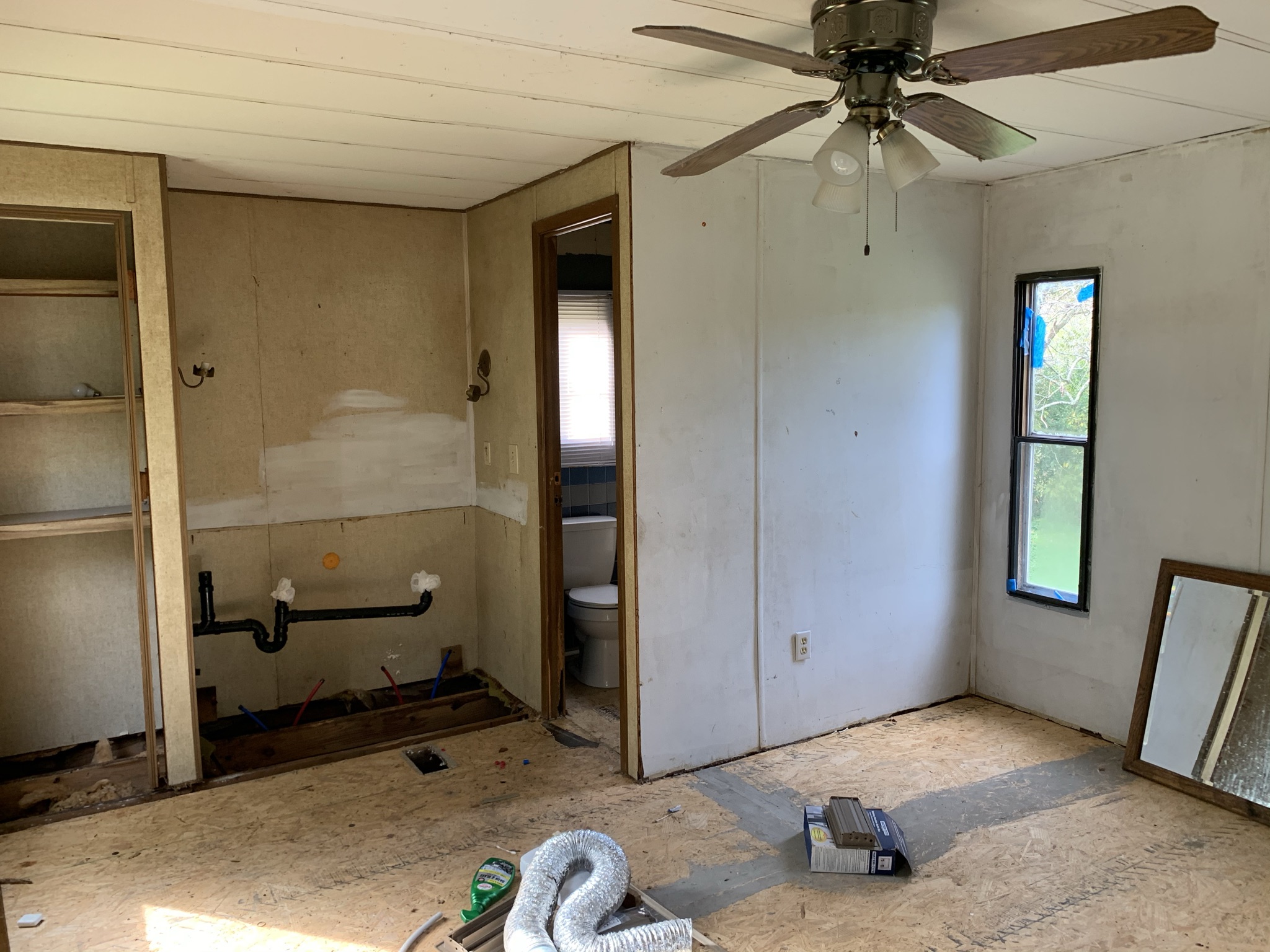
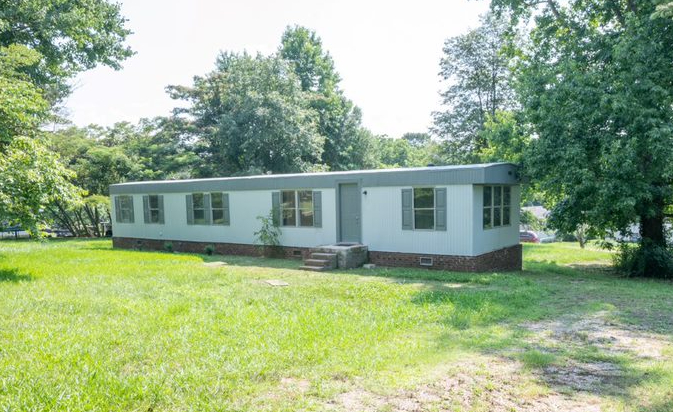
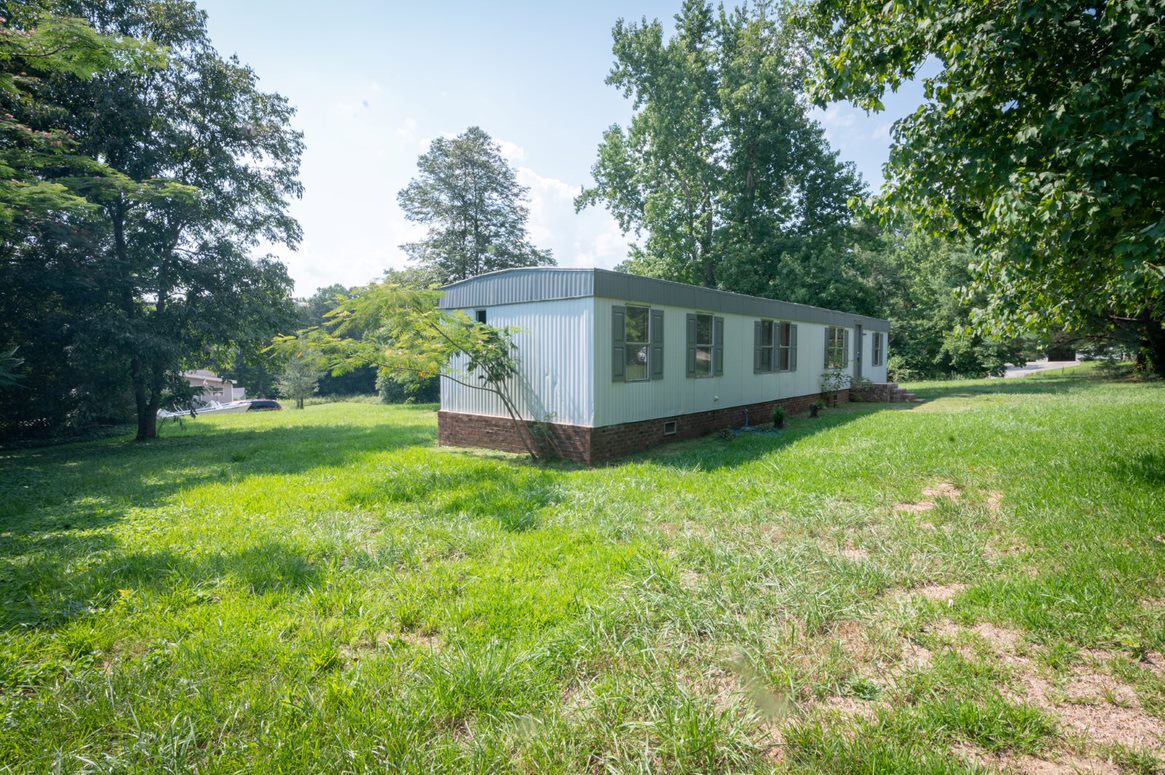
Ewing Drive was our first foray into rehabbing mobile homes. This mobile home was manufactured in 1980 and sits on three-quarters of an acre of land in Garner. It is a 2 bed/2 bath property that needed a TON of work. We bought Ewing from a seller, who owned multiple rental properties, at a great price. Our scope of work included interior/exterior painting, carpentry and electrical repairs, and replacing damaged flooring where necessary. We anticipated it would cost us about $15k to complete the necessary repairs. (side note – if you’re looking at the photos below and wondering why in the world we thought this was possible…then SAME- idk what we were thinking!)
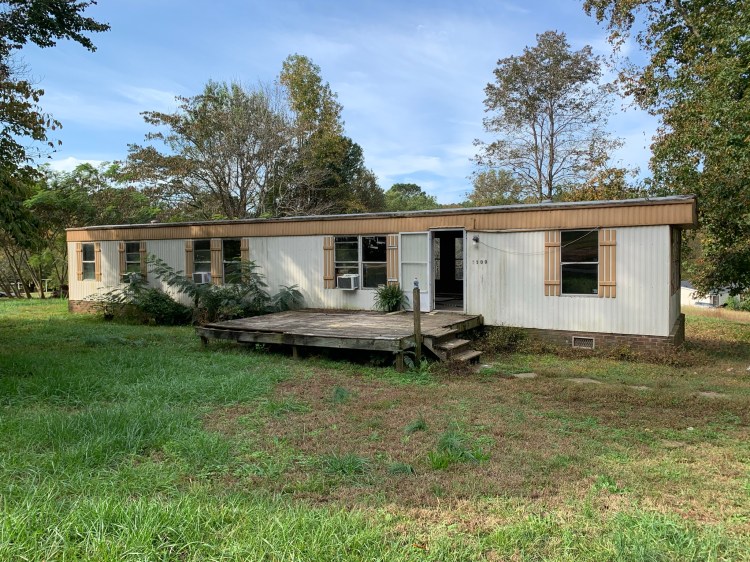
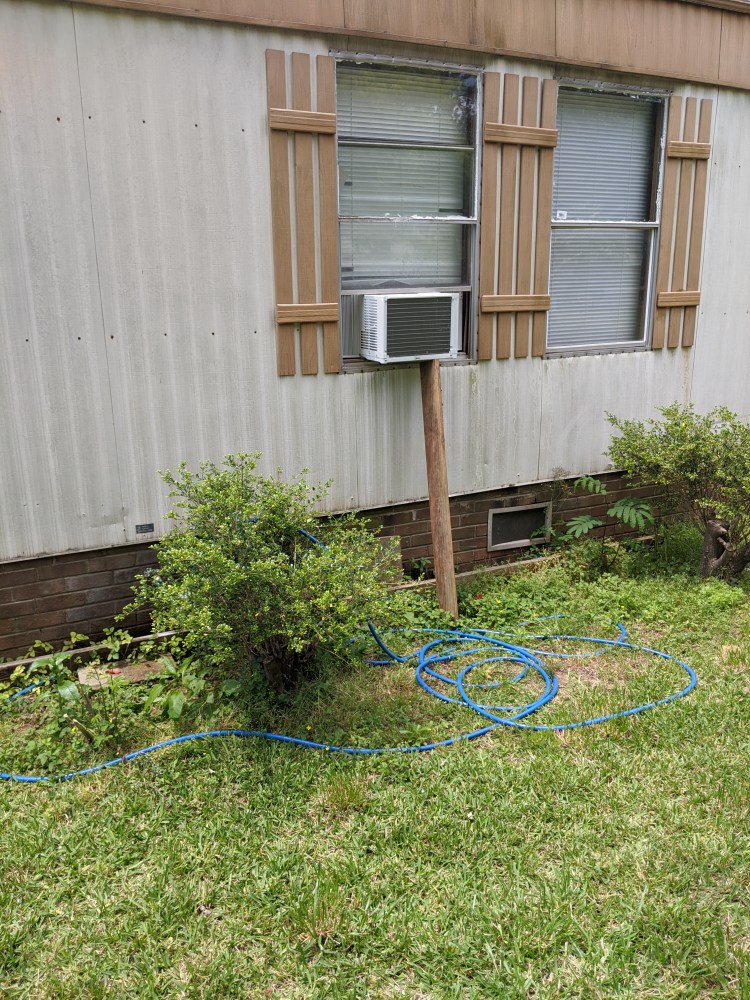
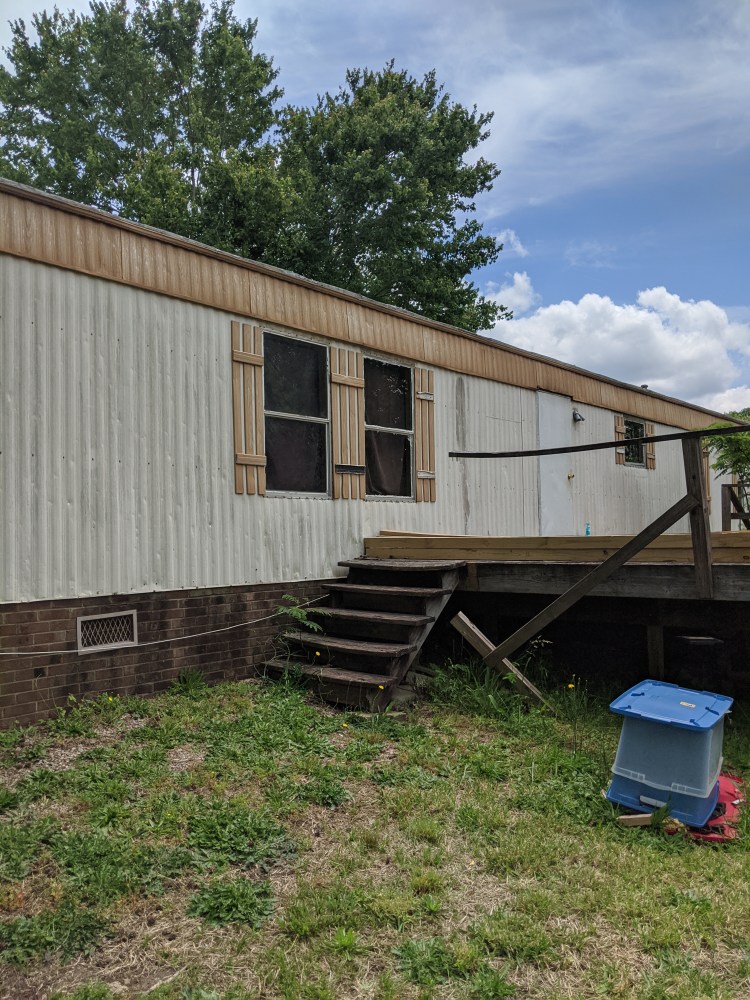
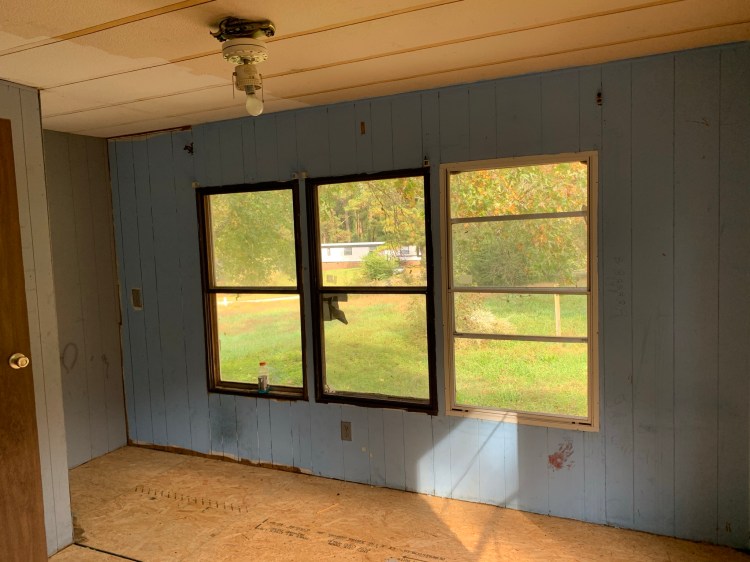
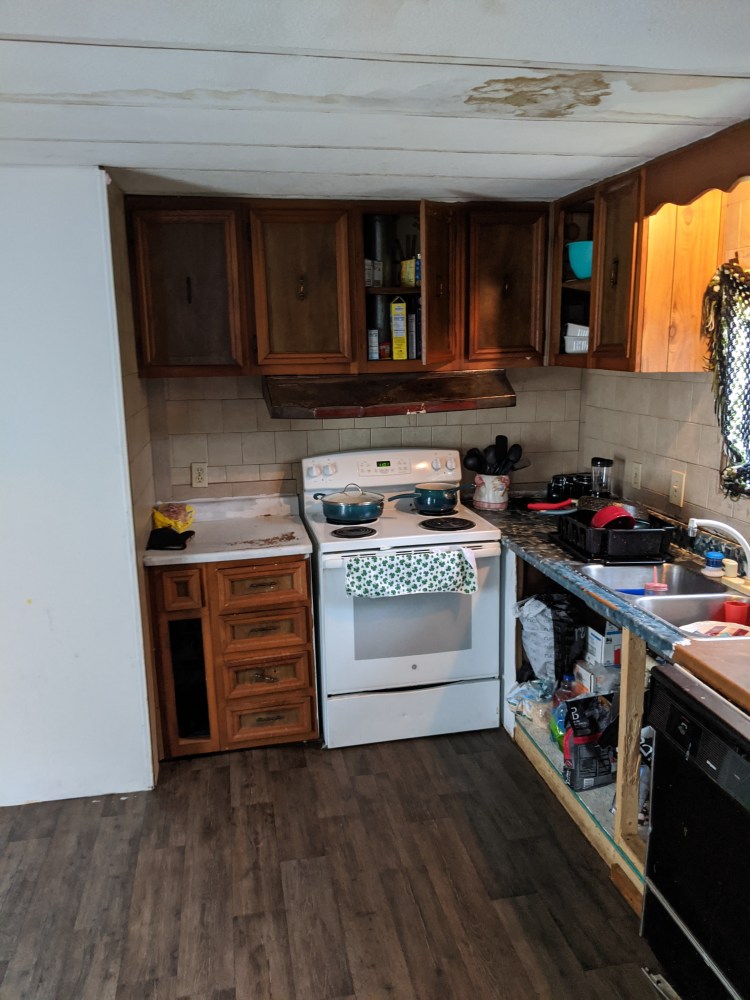
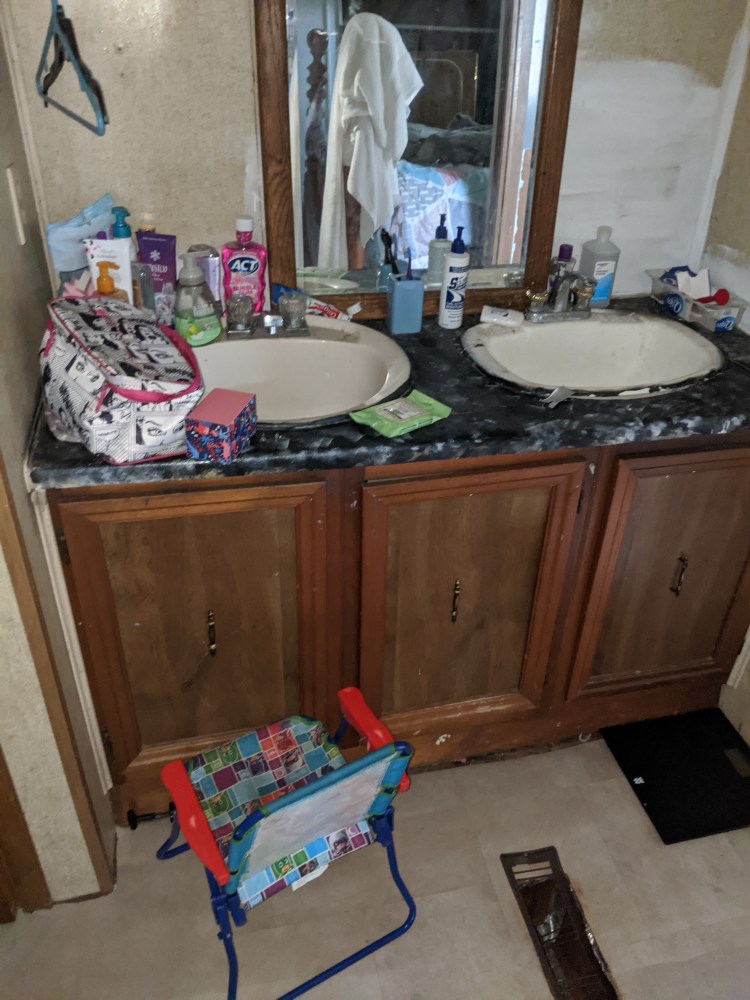
Yes, we were aware that it needed some serious TLC, but we weren’t anticipating how much time and effort we’d have to spend in order to make the house livable. We (yet again) made assumptions that would eventually bite us down the road. Lesson #1 – always have the house inspected prior to making an offer to purchase the property. A preliminary home inspection would have brought to light some of the glaring issues with the property, like all the damaged flooring and plumbing leaks. Had we gotten an inspection, we could have used this information to negotiate a lower purchase price based on the actual repairs needed.
If that wasn’t enough of a headache, we also inherited the existing tenants after closing on the property. Lesson #2 – have any remaining tenants sign a new lease prior to closing. Fortunately for us, the home was in such disrepair it seemed the tenants were ready to vacate the property. They stayed for two months and refused to pay rent so we decided to motivate them by offering “cash for keys”. We helped cover their moving expenses and they moved on – it was an easy decision for all parties involved.
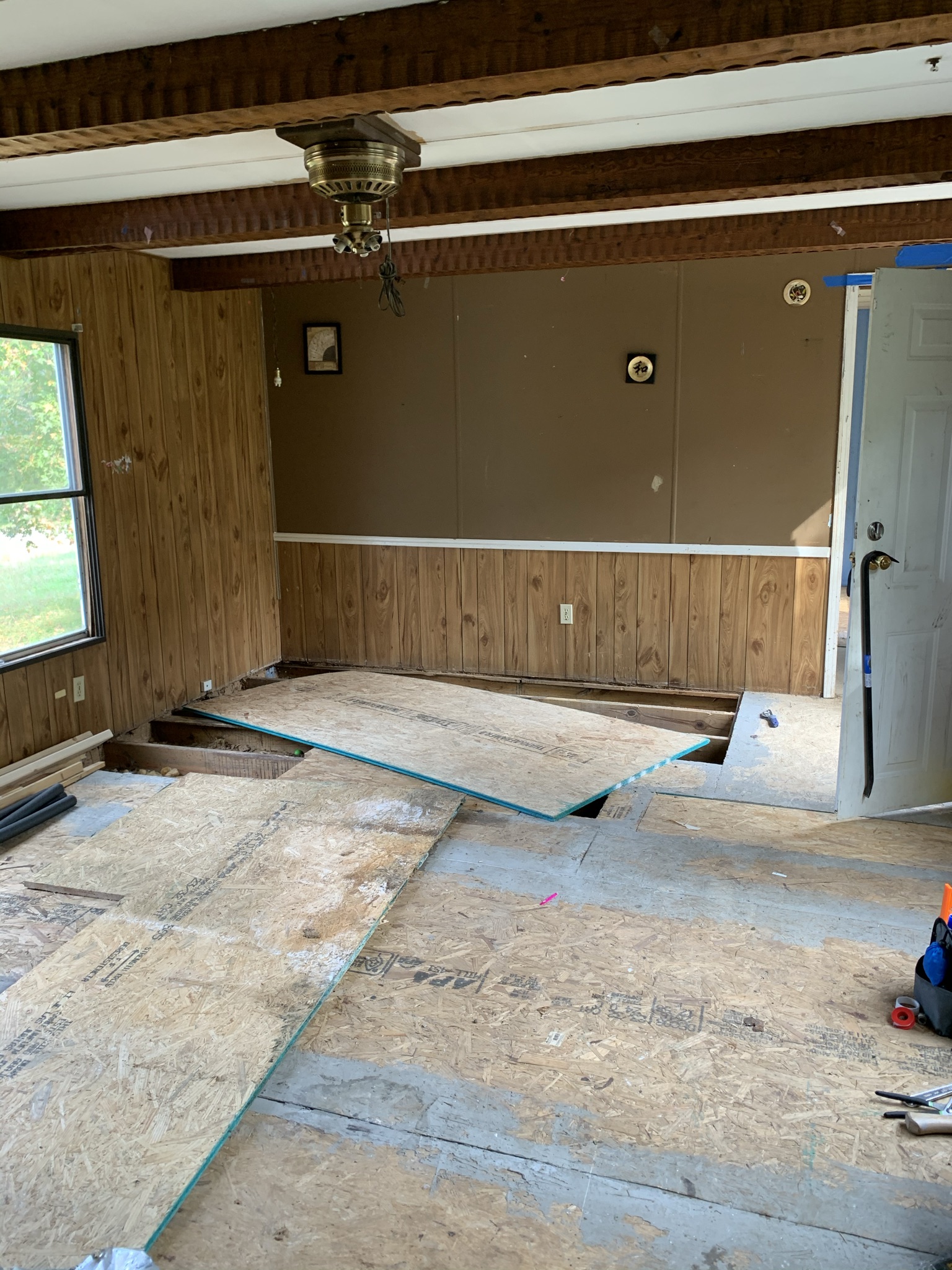
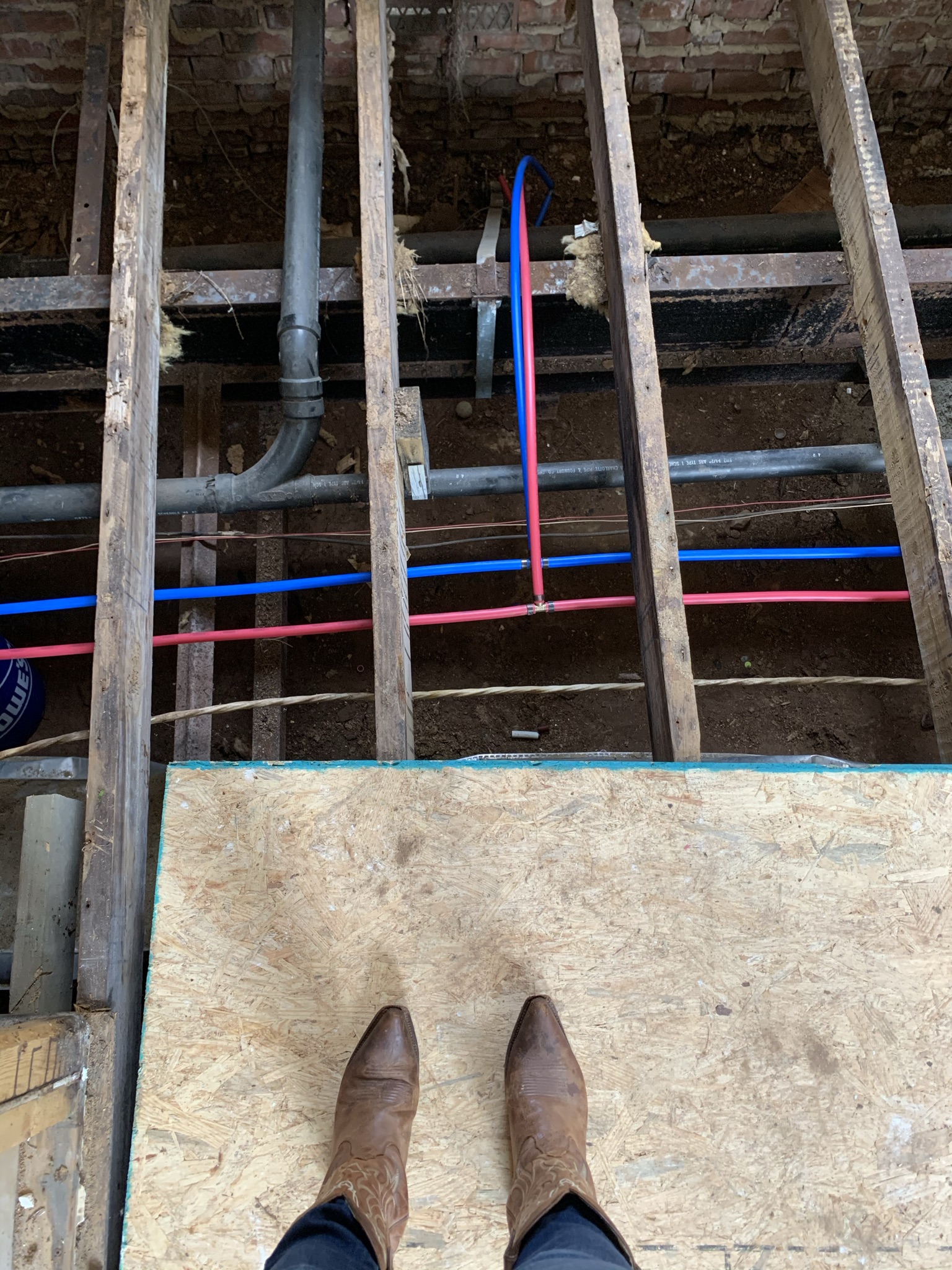
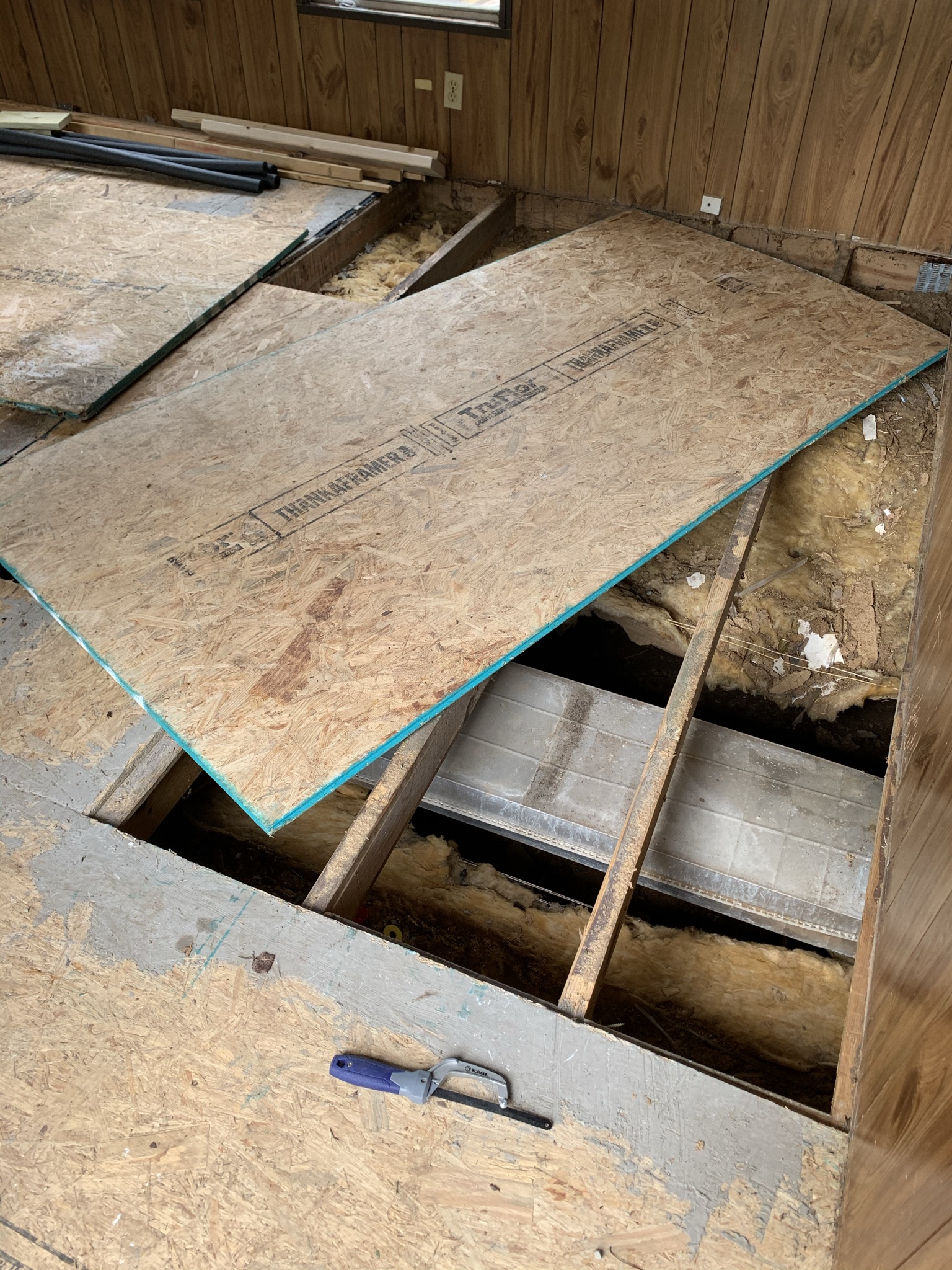
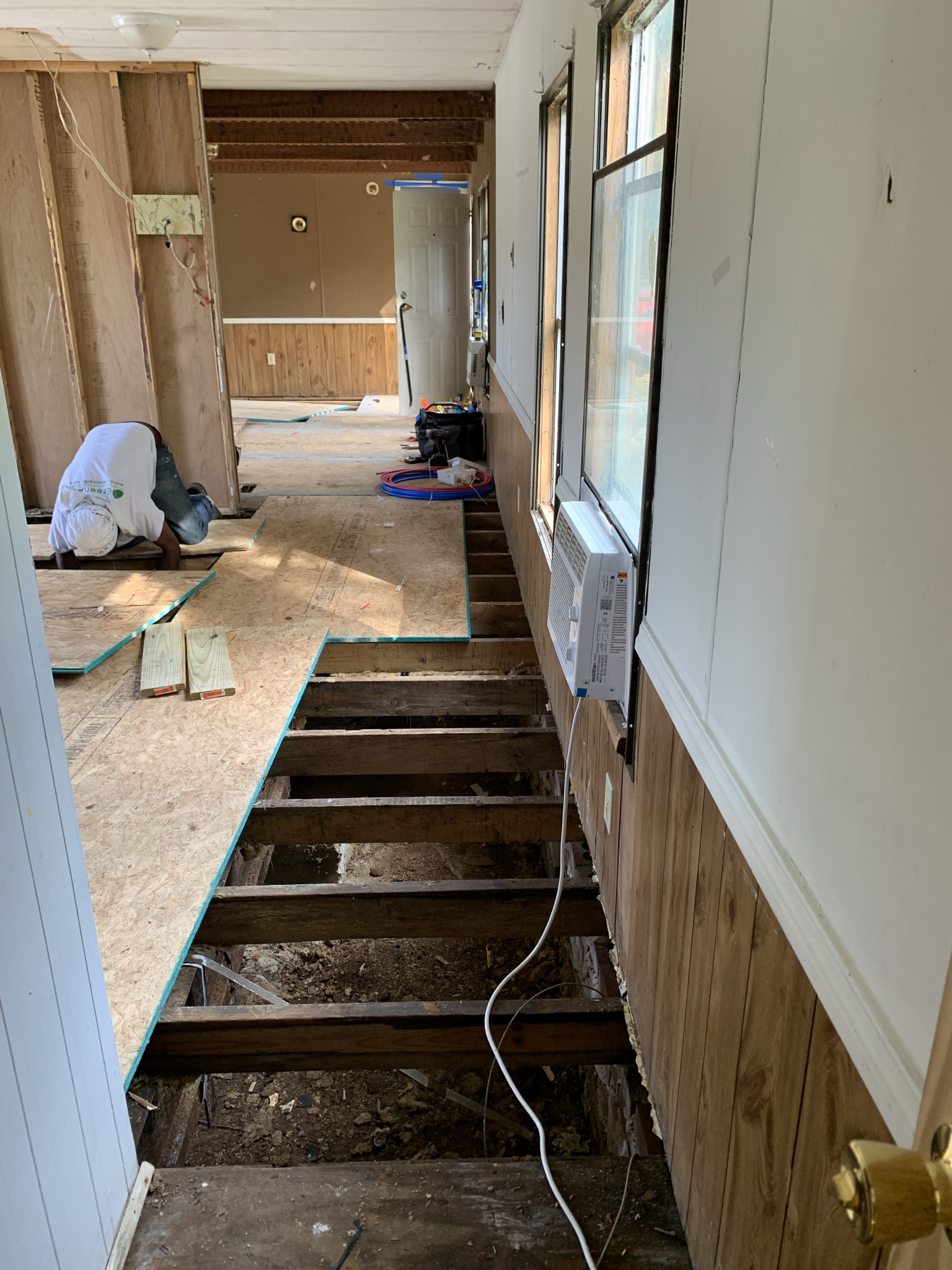
Once the property was vacant, the real fun started 🙂 The first order of business was to repair the subfloor. We removed the vinyl floor covering to reveal black swollen particle board that had started to disintegrate. There were actual holes in the subfloor. I have no idea how the vinyl alone supported any weight as people walked on top of it without falling through the house. We ended up replacing 100% of the subfloor in the kitchen and 75% in the living room. Fortunately, they had already replaced the subfloor with OSB in the bedrooms. It took us a week to remove and replace the subfloor and rotten bottom plates. Then the plumber informed us that there were 6 leaks/pinholes in the plumbing pipes of the crawl space. Those leaks were causing water to spray the underside of the subfloor, as well as, the ground below. At this point, we’ve fixed most of the flooring in the home, along with all the plumbing supply lines throughout the house.
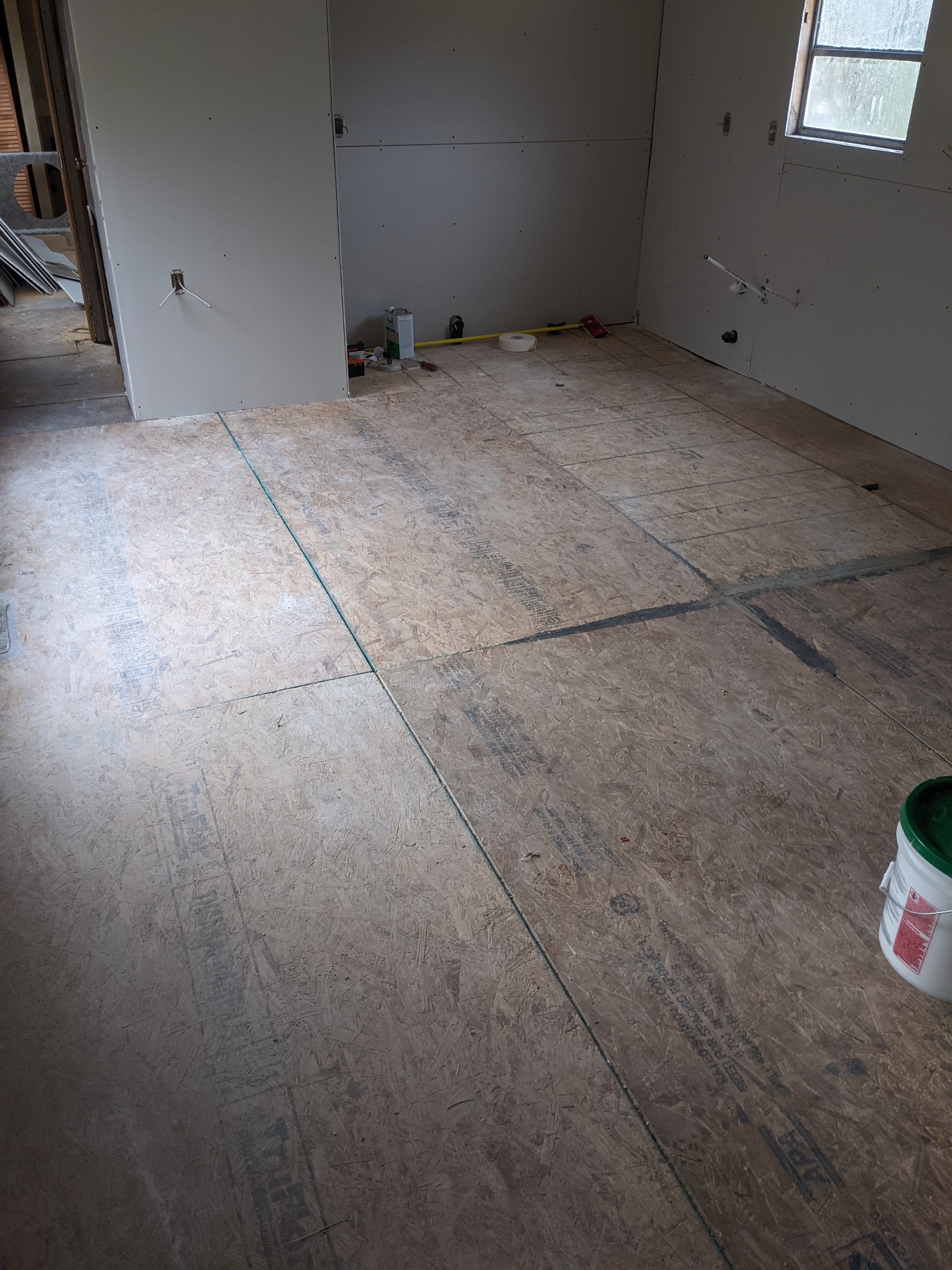
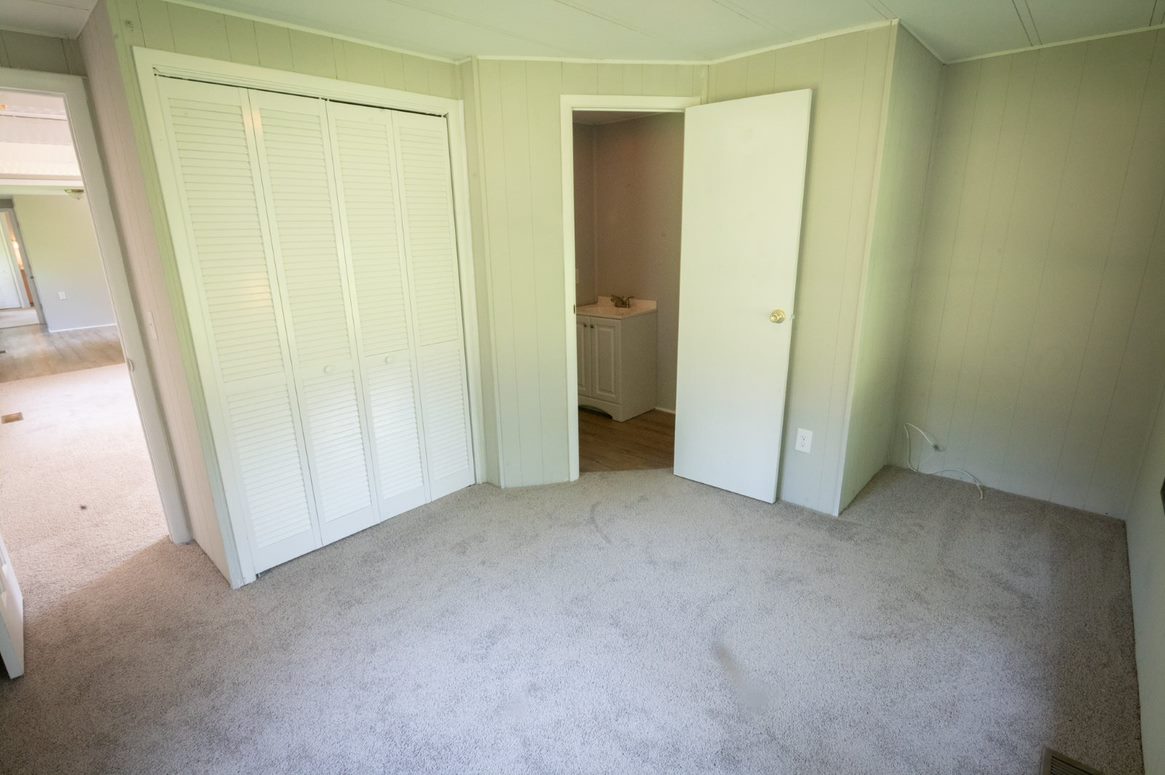
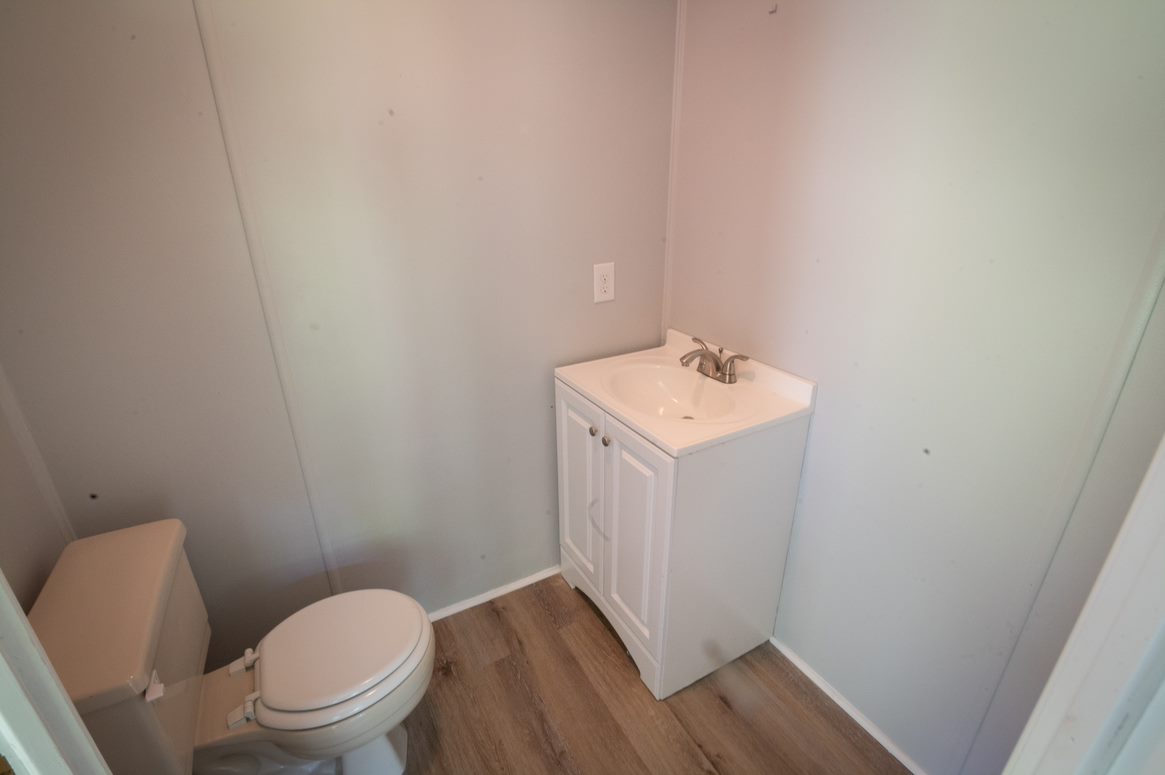
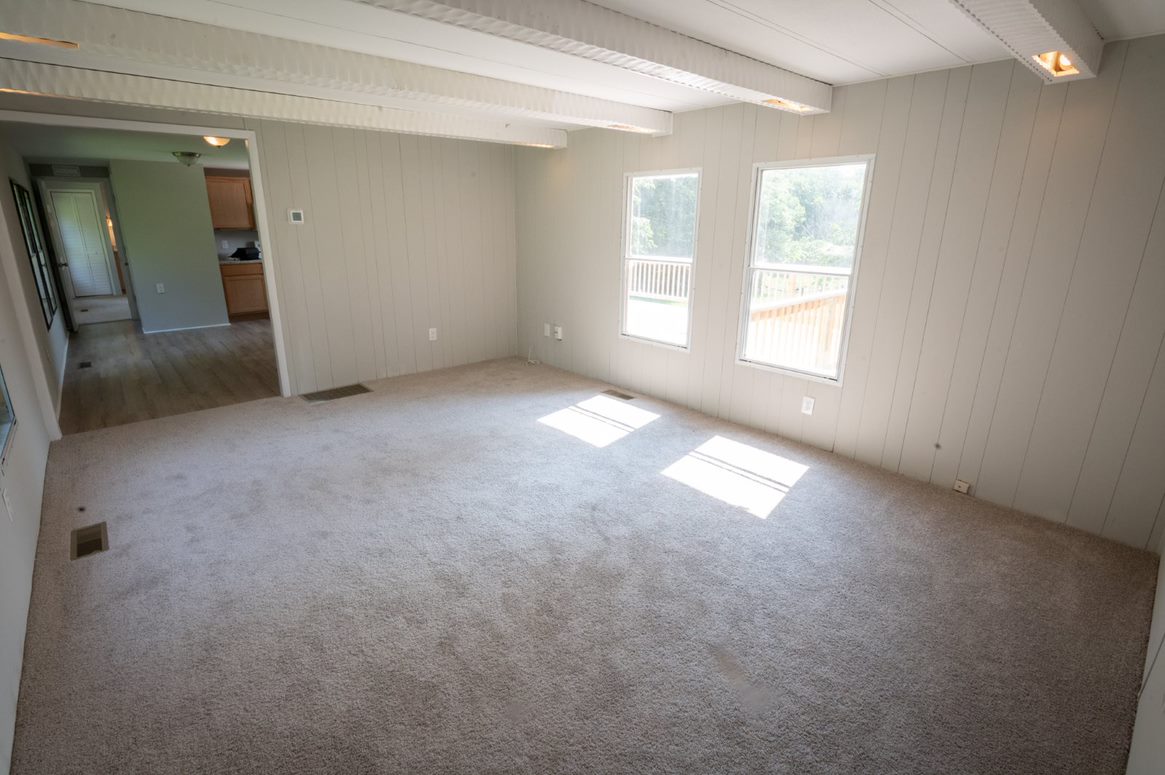
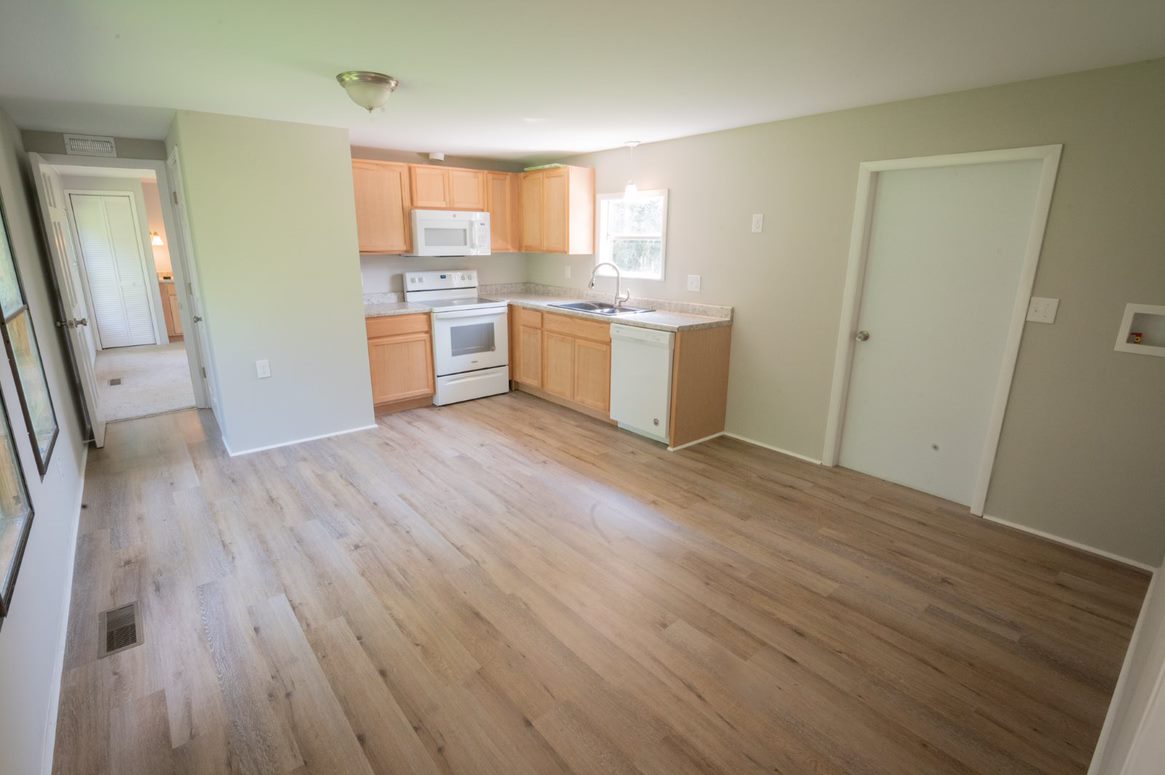
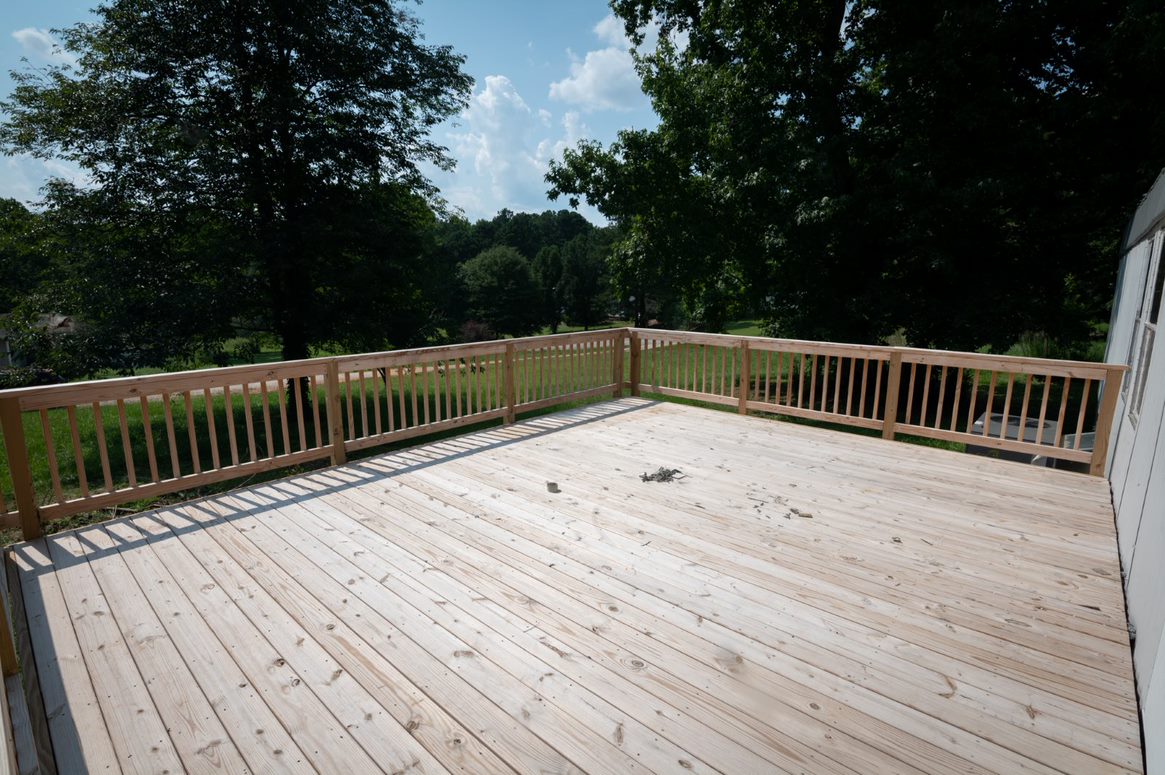
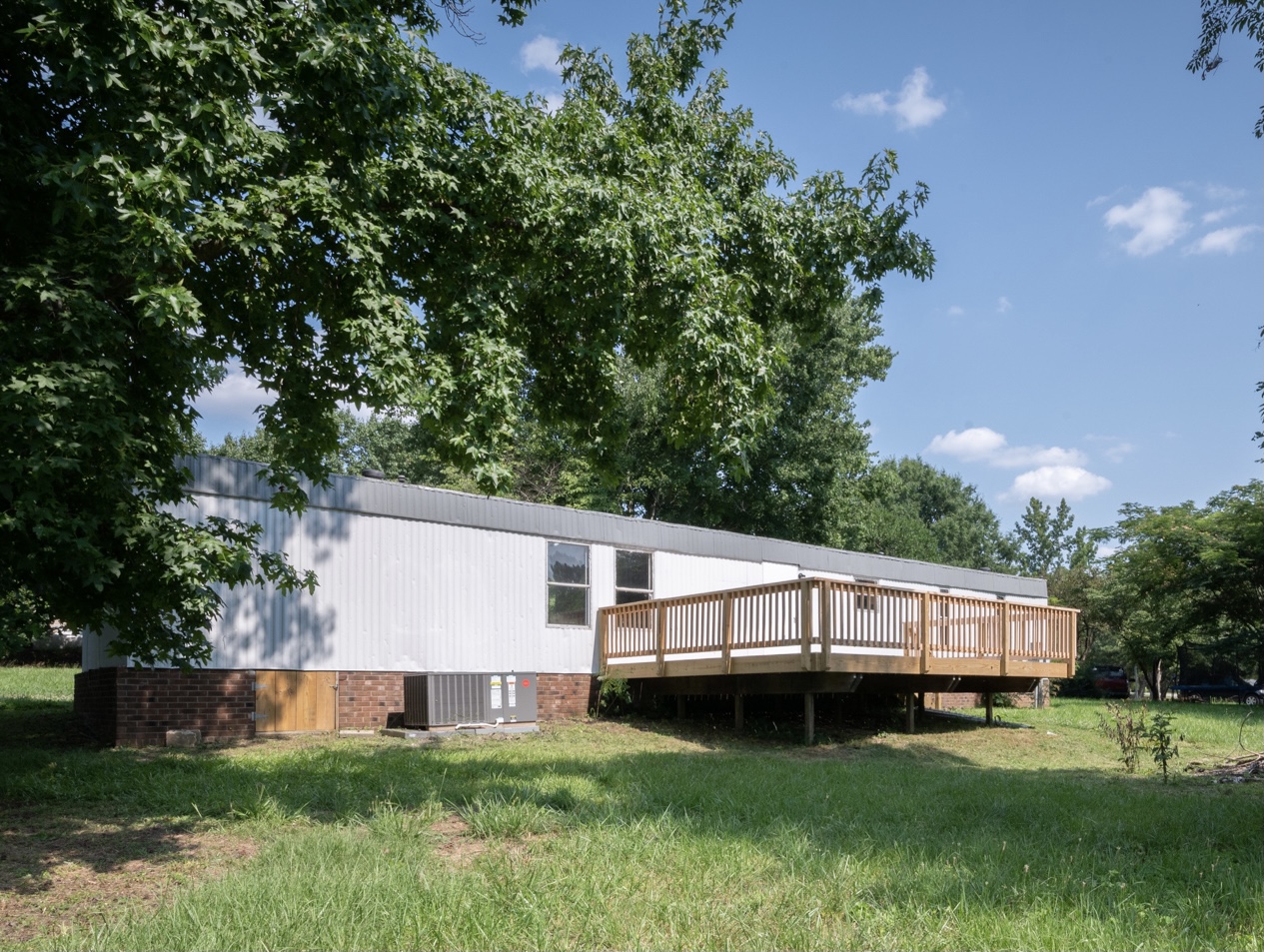
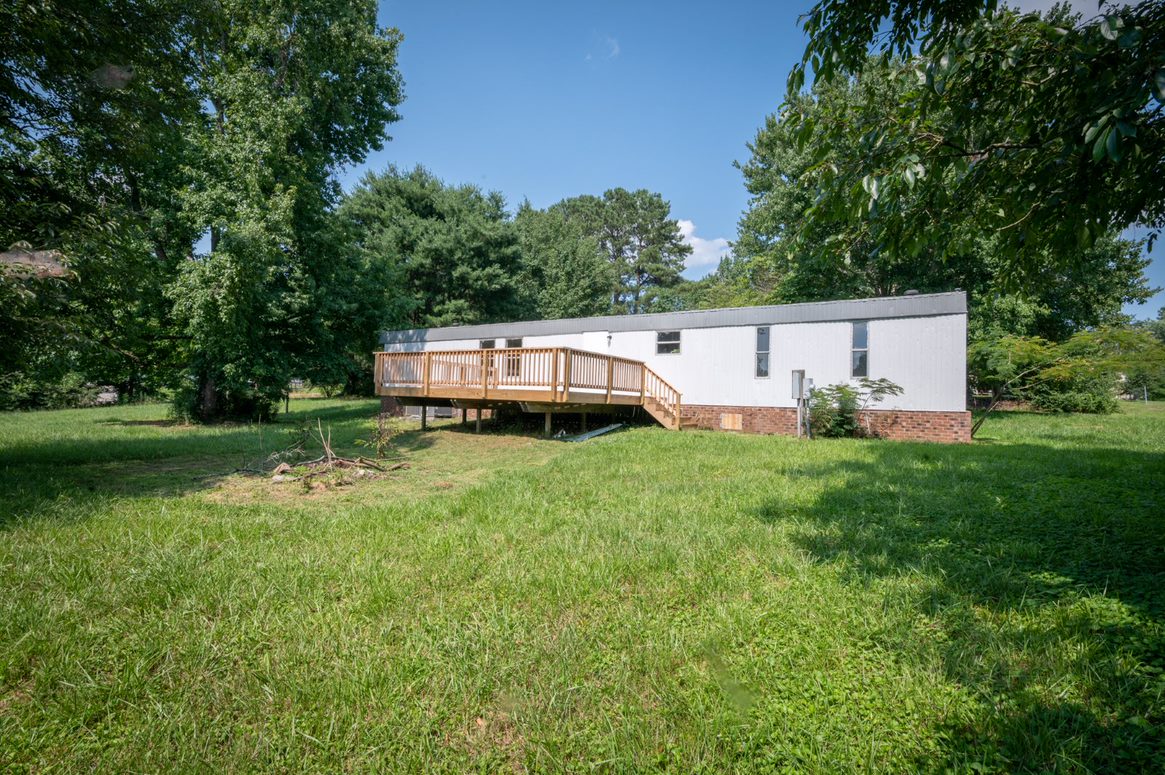
Next we turned our attention to the kitchen. The wall panels also suffered water damage caused by the leaking window A/C units. We replaced the wall panels with sheetrock, then installed new cabinets and laminate countertops. About the same time we started the kitchen renovation, we also began some of the exterior work. We had the roof re-coated, rebuilt the back deck, and painted the exterior of the home. We also had an HVAC company come and install a new system to eliminate the leaky window units. Now the ball is really rolling on the renovation. We replaced some windows, painted the interior, installed new carpet and vinyl flooring, and replaced all the fixtures. We listed the property for sale shortly after.
As I mentioned in the beginning, this was our first manufactured home flip. It wasn’t until we listed the property that we found out that most banks will not lend on a mobile home, especially not a single-wide. We had a lot of interest in the property, but no offers. When we’d reach out to the buyer’s agents, they would say that their clients were unable to secure a loan in order to purchase the property. We went online and were able to find 3 lenders that were willing to loan on single-wide mobile homes. The only caveat was that they had to be manufactured after 1977. Homes manufactured prior to ’77 are not up to current codes. Luckily, our home was an 80’s baby, making it just young enough to meet the standards. We were able to refer these lending companies to the interested buyers in the hopes one of them would work out. We were fortunate enough that one of the interested buyers were approved by one of the lenders; therefore, we’d be able to proceed with the sell of the property as long as the house appraised. Based on the string of bad luck and mistakes we’ve made throughout this process, do you think the appraisal came back to reflect our list price? Well as you probably assumed, that was a big NOPE. We had to lower the price by $19k which was extremely frustrating considering all the extra money we’d already put into the remodel. In the end, we still made a good profit on the property even though we had to lower the price.
What else did we learn on this flip?
We learned so much from this property. First and foremost is that manufactured homes are affordable housing for a lot of people. You can make really good money rehabbing mobile homes. You need access to a good mobile home supply company (shoutout to Fawks Mobile Home Supply in Garner). The exterior of manufactured homes are built with 2x4s, so you can supply parts needed from normal outlets like Home Depot and Lowe’s. The interior, on the other hand, is built with 2×3 framed walls. This is where the mobile home supply company comes in handy. For example, interior doors from the box stores will not work on 2×3 framed walls. Also, most of the trim used in manufactured homes can not be found at the box stores.
We also learned that when mobiles homes are first purchased, they are registered with the DMV. I reckon this is why they are called “mobile” homes, right? In order for a traditional bank to finance the purchase, you must “attach” the home to the land. This is done by building a brick or block foundation under the home. Next you need a real estate attorney to unregister the home from the DMV and deed it to the land. This way the home can be sold and resold with the land as a permanent dwelling.
All in all, this was a great learning experience for us. Although it took us over a year to finish and we went $30k over budget, we gained so much knowledge about buying, fixing, and selling manufactured homes. We purchased the property for $40k, spent $45k on the rehab, and ended up selling it for $130k. I imagine this was just the first of many mobile home flips to come 😉
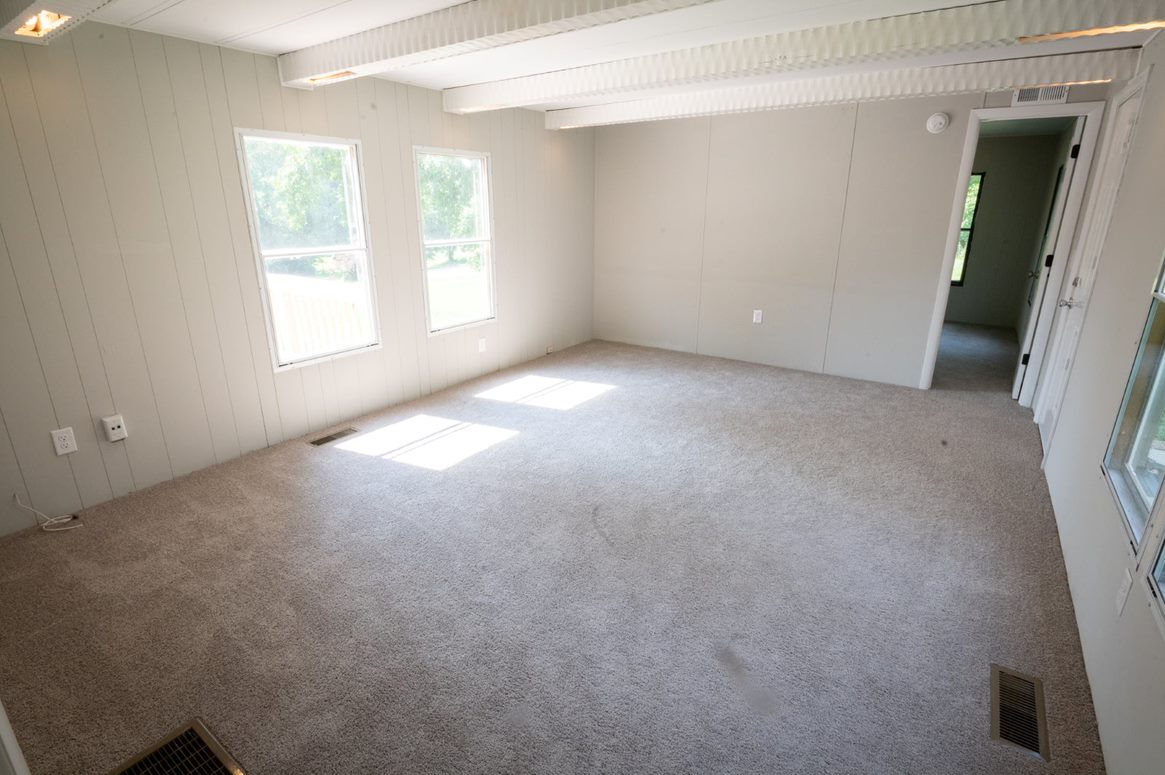
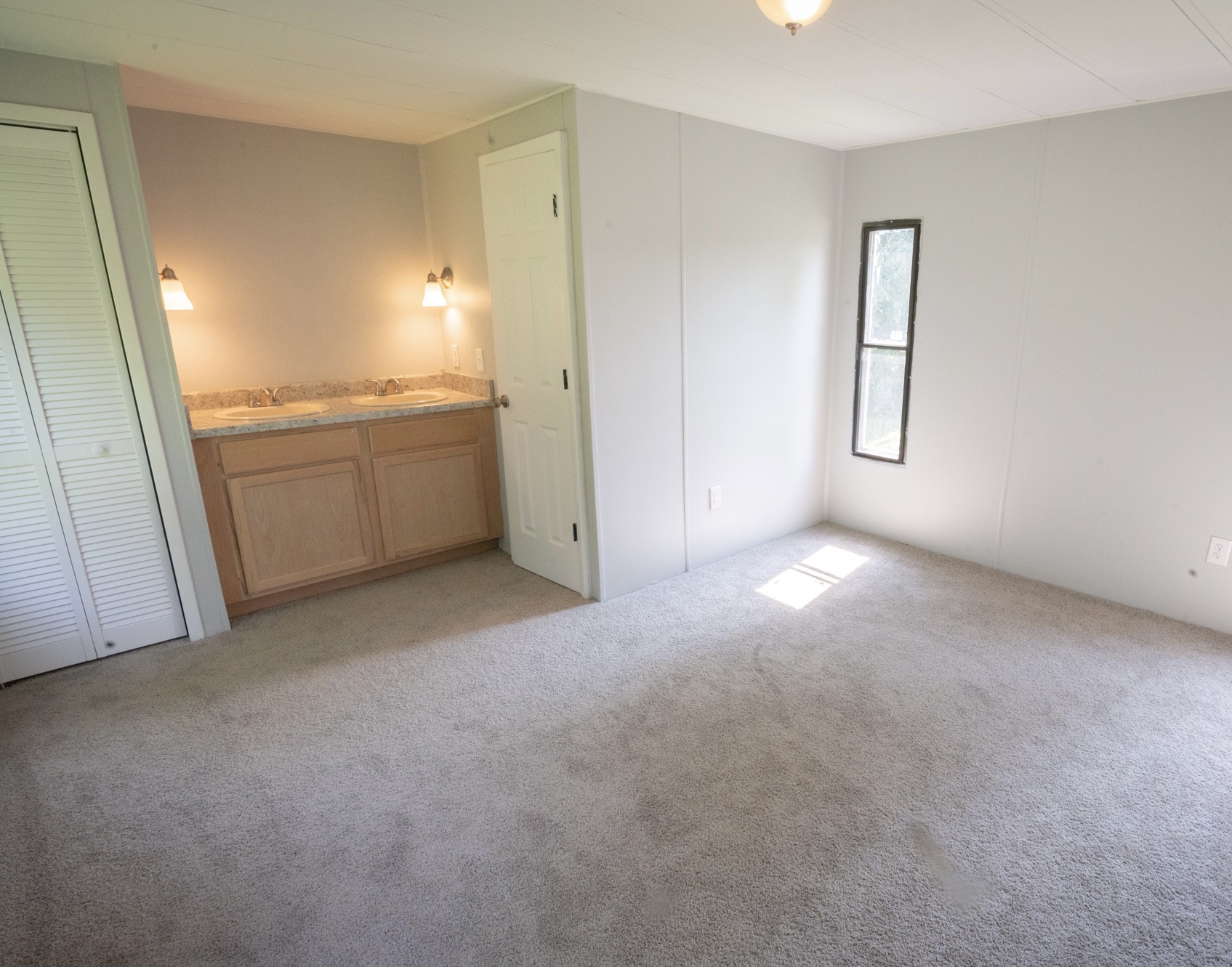
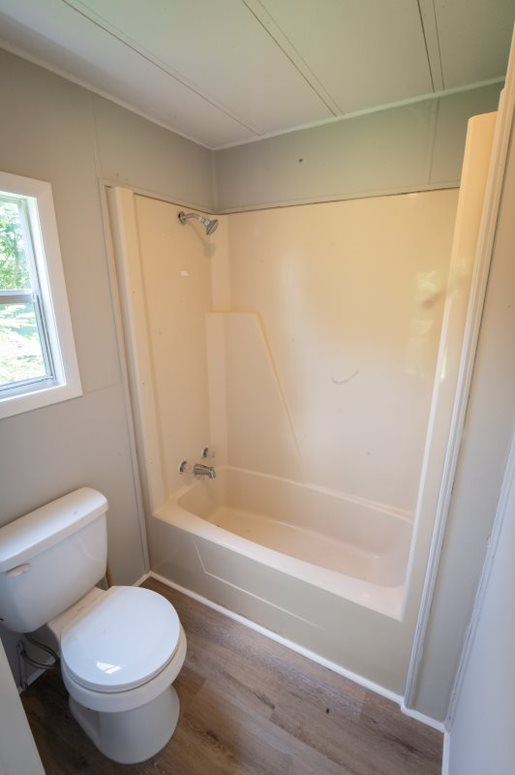
Check out the finished photos below. You can also see the side-by-side before & after photos here.


Thanks for the great information. I loved reading about this flip! ❤️
LikeLike
Great post and great lessons in your story. I also had purchased a mobile home and it had a roof leakage issue. Firstly I didn’t recognize it but then I found it. Thanks to ‘’RV Roof Magic’’ that solved my RV roofing issues successfully for a fraction of cost giving a hard, finished and aesthetically pleasing look to my RV roof. RV Roof Magic https://www.rvroofmagic.com/about-roof-coatings.php has given me long lasting and cost effective solution. It is a solvent based, one coat, primer free, easily applicable, DIY process that can be applied on your own by a bristle brush and without any need of a professional roofer aid. It gives remarkable advantages with 10 years warranty with its highly adhesive nature due to its chemical cross linking structure and has mesmerizing properties that no other sealant has.
LikeLike